


Think it's ok for your child to have occasional caffeine? Think again!

Could even one caffeinated drink a week affect a child’s brain and sleep? A study published in Biological Psychiatry: Cognitive Neuroscience and Neuroimaging suggests it may be worth paying attention. Researchers studying children ages 9 to 11 found that caffeine consumption—primarily from soda—was associated with less sleep, differences in brain structure, and mental health concerns. Children who consumed more caffeine also tended to have slightly less cortical surface area, highlighting the importance of understanding how caffeine may affect developing brains.
A child does not need to drink coffee to get too much caffeine. It can show up in soda, iced tea, chocolate, energy drinks, bottled refreshers, some sports products, and even a few over-the-counter medicines. Because caffeine feels ordinary to many adults, it is easy to miss how strongly it can affect a child’s body and mood.
Caffeine is a stimulant. In adults, it may help with alertness for a short time. In children, that same stimulant effect can interfere with sleep, focus, appetite, heart rate, and emotional regulation. The harmful effects of caffeine on children are often subtle at first, but they can build into daily problems that look like “bad sleep,” “restlessness,” or “trouble paying attention.”
This article is for general information only and is not a substitute for medical advice. A pediatrician can give guidance for a child’s age, health history, medications, and symptoms.
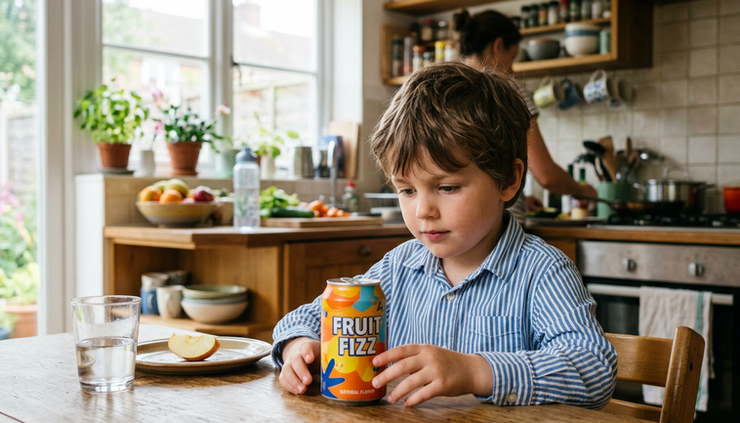
Children are more sensitive to caffeine than adults
Children are still growing. Their brains, sleep patterns, and nervous systems are developing, and their bodies are smaller. That means a drink that feels mild to an adult may feel strong to a child.
Caffeine works by blocking adenosine, a brain chemical that helps the body feel sleepy. It also triggers a stimulant response that can make the heart beat faster and the mind feel more alert. For some children, this can lead to:
Jitters or shakiness
Restlessness
Trouble sitting still
Nervousness
Irritability
Headaches
Stomach discomfort
A faster heartbeat
These symptoms can be mistaken for behavior problems. A child who seems moody, wired, or unable to settle may not be “acting out.” Their body may be reacting to caffeine.
The timing matters too. Caffeine can stay active in the body for hours. A caffeinated drink after school can still affect bedtime, even if the child no longer feels “awake” from it.
Caffeine can disrupt sleep
Sleep is one of the biggest concerns. Children need enough sleep for growth, learning, immune function, emotional control, and memory. Caffeine can make it harder to fall asleep and may reduce sleep quality.
A child may still go to bed at the usual time, but caffeine can cause:
Longer time spent trying to fall asleep
More nighttime waking
Lighter, less restful sleep
Morning tiredness
Daytime crankiness
This can start a frustrating cycle. A tired child may crave sweet drinks or more caffeine the next day to feel alert. Then the next night’s sleep gets worse again.
Poor sleep can also affect school. Children who do not sleep well may have trouble listening, remembering instructions, managing frustration, or staying engaged. The problem may show up as attention issues, when the root cause is not enough quality rest.
For many families, cutting caffeine is one of the simplest sleep changes to try. It is not the only sleep factor, but it can make a real difference.
Energy drinks are especially risky for children
Not all caffeinated drinks are the same. Coffee and tea contain caffeine, but energy drinks raise extra concerns because they often combine caffeine with large amounts of sugar, herbal stimulants, and other ingredients.
Some energy drinks contain caffeine levels similar to coffee. Others contain more. Serving sizes can also be confusing. A child may drink a full can or bottle without realizing it contains more than one serving.
Energy drinks may cause stronger stimulant effects, such as:
Racing heartbeat
Trembling
Anxiety
Nausea
Dizziness
Trouble sleeping
Feeling “wired” or unable to calm down
The American Academy of Pediatrics has warned that energy drinks are not appropriate for children and adolescents. Sports drinks are different from energy drinks, but they can still contain sugar and are often unnecessary outside long or intense physical activity.
A simple rule helps: children should not use energy drinks as a regular beverage, a study aid, or a sports performance tool.
Caffeine may worsen anxiety and mood swings
Caffeine can copy the body’s stress response. It can make the heart pound, increase alertness, and create a sense of urgency. For adults, that may feel like a boost. For children, it can feel uncomfortable or scary.
Children who are already prone to worry may be more likely to feel anxious after caffeine. They may describe it as a stomachache, chest discomfort, “butterflies,” or feeling like something is wrong.
Mood can shift too. A child may feel energetic at first, then irritable as the caffeine wears off. If the drink also contains a lot of sugar, the ups and downs may feel even stronger.
This does not mean caffeine causes every case of anxiety or moodiness. It does mean caffeine can make those symptoms harder to manage for some children.
Signs caffeine may be affecting mood include:
Sudden irritability after soda, tea, or energy drinks
Trouble calming down in the evening
More frequent complaints of nervous feelings
Restlessness that appears after certain drinks
Headaches or crankiness when caffeine is skipped
Keeping a simple food and drink log for a week can help reveal patterns.
It can affect the heart and body
Caffeine stimulates the nervous system, and that can affect the heart. Some children may notice a fast heartbeat, palpitations, or a fluttery feeling after consuming caffeine. This can be more concerning for children with certain heart conditions or those taking specific medications.
Caffeine can also bother the stomach. It may increase acid production and contribute to nausea, stomach pain, or reflux-like symptoms in some children. It can act as a mild diuretic too, which means it may increase urination. For most healthy children, this effect is not the main issue, but it can still be uncomfortable.
Too much caffeine can cause more serious symptoms. Seek medical help right away if a child has severe chest pain, fainting, confusion, repeated vomiting, trouble breathing, or a very fast or irregular heartbeat after consuming caffeine.
Accidental caffeine intake can happen with pills, concentrated powders, certain supplements, or large amounts of energy drinks. These products can be dangerous because they may contain much higher amounts than a typical beverage.
Caffeine can replace better nutrition
One of the quieter problems with caffeine is what it pushes out. Children have limited room in their diets. When soda, sweet tea, coffee drinks, or energy drinks become routine, they often replace water, milk, and balanced snacks.
Many caffeinated drinks also contain added sugar. Sweet coffee drinks, bottled teas, sodas, and energy drinks can add sugar without adding much nutrition. Over time, this can shape taste preferences and make plain water or unsweetened drinks less appealing.
Regular caffeine intake may also reduce appetite for real food in some children, especially when drinks are large or sugary. A child may fill up on sweet beverages and then eat less at meals.
Healthier choices include:
Water
Milk or fortified unsweetened alternatives
Naturally caffeine-free herbal teas served safely and age-appropriately
Sparkling water without caffeine
Smoothies made with fruit and yogurt
Fresh fruit with water after play or sports
Conclusion
In light of these findings, it's crucial for parents and caregivers to be mindful of children's caffeine intake. Even small amounts of caffeine can potentially impact sleep quality and brain development, which are vital for a child's growth and overall well-being. As research continues to unfold, fostering healthy habits around caffeine consumption may play a significant role in ensuring that children thrive both mentally and physically.


Comments